Moving overseas from Louisiana involves far more than loading furniture into a container. Families, professionals, students and businesses relocating from New Orleans need to think about packing, export documentation, container selection, European customs procedures, delivery arrangements and the timing of their move.
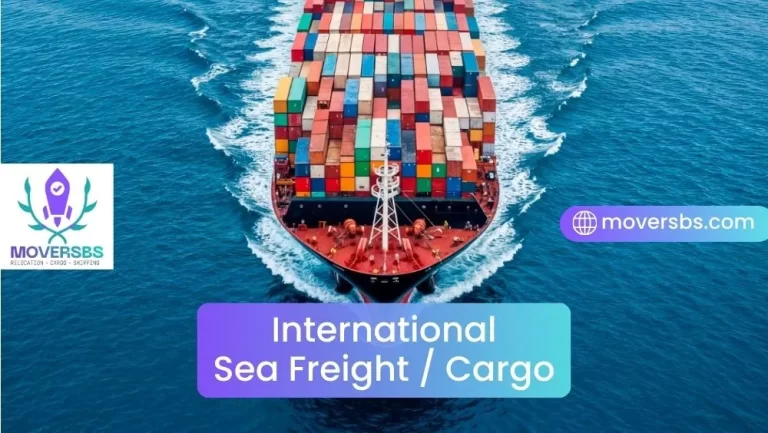
For anyone planning a New Orleans to Europe international move, ocean freight remains one of the most practical choices for household goods, personal effects, furniture and larger relocation shipments. New Orleans also offers a useful starting point because the Port of New Orleans has established container connections with European and Mediterranean markets. Port NOLA lists regular services connecting New Orleans with Europe through several major ocean carriers.
With proper planning, international container shipping from New Orleans to Europe can provide a secure and organised way to move anything from a small household shipment to the contents of a large family home.
International Movers from New Orleans to Europe
A door-to-door international move normally combines several separate services into one coordinated relocation.
Table of Contents
ToggleThe process may include:
- Home survey and shipment assessment
- Professional packing
- Furniture dismantling
- Export wrapping and protection
- Truck transport to the departure terminal
- Export documentation
- Container loading
- Ocean freight
- European customs clearance
- Port handling
- Destination transport
- Furniture reassembly
- Delivery to the new European residence
Therefore, when comparing international moving companies in New Orleans, looking only at the ocean freight price can be misleading. A cheaper port-to-port quotation may leave the customer responsible for customs clearance, terminal costs and final delivery.
A detailed quotation should clearly state which services are included. Get details on International Movers from USA to Denmark.
Shipping Household Goods from New Orleans to Europe
Household goods commonly shipped overseas include:
Furniture, mattresses, sofas, dining tables, wardrobes, books, kitchenware, clothing, bicycles, artwork, personal belongings and home-office equipment.
Before packing, however, it is sensible to separate belongings into four groups: items to ship, sell, donate and discard.
Moving everything simply because it fits inside the house can increase packing volume and transportation costs unnecessarily.
For example, shipping inexpensive furniture across the Atlantic may cost more than replacing it after arrival. On the other hand, quality furniture, personal collections and sentimental belongings may be well worth transporting.
Port of New Orleans Container Shipping to Europe
The Port of New Orleans provides connections to international markets through major container carriers. Port information lists European connections through carriers including CMA CGM, COSCO, Evergreen, Hapag-Lloyd, Maersk and MSC, although individual schedules and routings can change.
Port NOLA has also reported connectivity to dozens of ports directly and hundreds more through transshipment services.
Consequently, shipments originating in the New Orleans region can move toward major European gateways such as:
European Gateway | Common Destination Markets |
Rotterdam | Netherlands, Germany, Belgium and nearby European markets |
Antwerp-Bruges | Belgium, France, Netherlands and Central Europe |
Hamburg | Germany, Denmark, Poland and Central Europe |
Le Havre | France and neighbouring areas |
Algeciras | Spain, Portugal and Mediterranean connections |
Barcelona | Spain and Southern Europe |
Valencia | Spain and Mediterranean destinations |
Genoa | Italy, Switzerland and Southern Europe |
The final port does not always need to be closest to the destination city. Shipping schedules, customs arrangements, inland trucking and carrier networks may make another European port more practical.
20ft vs 40ft Container for International Moving
Choosing the right container is one of the biggest decisions in household goods shipping from New Orleans to Europe.
Container | Approx. Internal Volume | Typically Suitable For |
20ft container | Around 33 m³ | Small to medium household relocation |
40ft container | Around 67 m³ | Larger household or substantial furniture shipment |
40ft high-cube | Around 76 m³ | Large-volume household or commercial relocation |
LCL / Groupage | Based on shipment volume | Smaller moves that do not require a full container |
These are container capacities rather than guaranteed usable household-goods volumes. Furniture shape, protective packing and loading arrangements affect how much can actually fit. Looking for a International Movers from USA to Norway.
When Does a 20ft Container Make Sense?
A 20ft shipping container from New Orleans to Europe can work well for couples, smaller families or households that have reduced their belongings before relocation.
It also offers exclusive container space, which can simplify shipment management compared with sharing a container.
When Should You Choose a 40ft Container?
A 40ft container becomes more practical when relocating a larger home, shipping several rooms of furniture or moving bulky belongings.
Because the cost of a 40ft container is not normally twice the cost of a 20ft container, it can offer better value per cubic metre for larger moves.
LCL Shipping from New Orleans to Europe
You do not necessarily need your own container.
Less-than-container-load shipping (LCL) allows several shipments to share container capacity. Customers normally pay according to the volume their belongings occupy.
LCL may suit:
- Studio apartment moves
- Student relocations
- A few pieces of furniture
- Personal effects
- Small household shipments
- Customers who do not have enough cargo for a full container
However, shared-container shipments require consolidation and deconsolidation. Therefore, transit can sometimes take longer than dedicated FCL shipping.
How Much Does Container Shipping from New Orleans to Europe Cost?
There is no fixed New Orleans to Europe international moving cost because prices depend on destination, shipment size, service level, packing requirements and current ocean freight conditions.
Recent public freight data illustrates how much individual routes can vary. For example, a September 2026 New Orleans–Algeciras quote showed ocean freight beginning around $2,044 for a 20ft container and $3,263 for a 40ft high-cube, with listed transit periods around 38–45 days.
Meanwhile, September 2026 public rates for New Orleans–Genoa began at roughly $2,619 for a 20ft container and $3,838 for a 40ft high-cube, with quoted transit periods around 45–50 days.
These are freight-market examples, not complete household-moving quotations.
A practical planning budget might look like this:
Cost Component | Indicative Planning Range |
Professional packing | 800–3,000+ |
Origin collection | 400–1,500+ |
20ft ocean freight | 2,000–5,000+ |
40ft/40HC ocean freight | 3,000–7,000+ |
Export/terminal charges | 400–1,500+ |
Destination port/customs handling | 500–2,000+ |
European home delivery | 600–3,000+ |
Marine insurance | Usually based on declared shipment value |
Important: These numbers are broad planning figures rather than guaranteed rates. Seasonal demand, fuel surcharges, destination port fees, access restrictions, exchange rates and carrier capacity can alter the final quotation considerably. Get details on International Movers from USA to Germany.
Door-to-Door Moving from New Orleans to Europe
Many customers prefer door-to-door international moving because responsibility remains coordinated from the Louisiana residence through to the European destination.
A typical move follows these stages:
New Orleans home → professional packing → container/loading facility → Port of New Orleans → ocean transport → European port → customs clearance → local delivery → unpacking.
This approach also reduces the number of separate companies the customer needs to organise personally.
For families unfamiliar with international freight procedures, that can make the relocation considerably easier.
How Long Does Shipping from New Orleans to Europe Take?
Actual transit depends heavily on the European port.
As current market examples, published New Orleans–Algeciras sailings in September 2026 showed approximately 38–45 days, while New Orleans–Genoa quotations indicated around 45–50 days.
However, port-to-port sailing time is only one part of an international move.
A more realistic household relocation schedule should allow time for:
Stage | Typical Planning Allowance |
Survey and booking | 1–2 weeks |
Packing and collection | 1–5 days |
Export preparation | Several days |
Ocean transit | Roughly 3–8+ weeks depending on route |
European customs | Several days or longer if inspection occurs |
Final delivery | Several days after clearance |
Consequently, customers should avoid planning important dates around the vessel’s estimated arrival date alone.
Customs inspections, port congestion, transshipment and documentation problems can create delays.
Customs Clearance for Household Goods in Europe
Customs requirements differ depending on the destination country.
People transferring their normal residence from outside the European Union may qualify for customs duty relief on personal belongings when applicable conditions are met. The European Commission specifically recognises duty-relief arrangements for personal belongings imported when moving from a non-EU country into the EU.
EU guidance concerning transfer-of-residence relief includes conditions relating to ownership/use periods and the timing of the goods’ importation. For example, applicable guidance discusses personal property generally being in the person’s possession for at least six months and shipment within defined periods connected to establishing residence.
Nevertheless, destination-country rules and document requirements should always be confirmed before shipping.
Common documents can include:
- Passport copy
- Residence visa or permit where applicable
- Detailed packing list
- Inventory of household goods
- Proof of previous residence
- Proof of new European residence
- Shipping documents
- Customs declaration
- Transfer-of-residence documentation
- Insurance documentation
Incomplete documents can delay clearance and lead to extra port storage or handling charges. Looking for a Moving from USA to UK.
Packing Furniture for Overseas Shipping
International furniture travels through several handling environments before reaching the destination. Therefore, ordinary local-moving protection may not be enough.
Professional export packing may involve:
- Multi-layer wrapping
- Heavy-duty cartons
- Furniture blankets
- Corner protection
- Moisture-resistant wrapping
- Custom wooden crates
- Mattress protection
- Glass and artwork packing
- Numbered inventory labels
In addition, furniture that can safely be dismantled may use less container space.
For example, removing table legs or dismantling bed frames can reduce wasted volume while making items easier to protect.
International Moving Insurance
Even carefully packed goods travel thousands of miles and pass through terminals, vessels and road transport.
For that reason, customers should discuss international moving insurance before the shipment leaves New Orleans.
Two common approaches include total-loss cover and broader all-risk or comprehensive cover, although terminology and conditions depend on the insurer.
Customers should also prepare an accurate declared-value inventory instead of assigning one vague value to an entire household.
High-value belongings such as artwork, antiques or specialised equipment may need separate valuation or additional packing.
Related Services:
» International Movers from USA to Austria
» International Movers from USA to Greece
» International Movers from USA to Sweden
» International Movers from USA to Switzerland
» International Movers from USA to Italy
» International Movers from USA to Ireland
» International Movers from USA to Spain
» International Movers from USA to Poland
» International Movers from USA to France
» International Movers from USA to Portugal
Items to Check Before Shipping to Europe
Certain belongings may be restricted, regulated or require additional documentation.
Examples can include:
- Alcohol
- Tobacco
- Prescription medicines
- Food products
- Plants and seeds
- Weapons
- Certain chemicals
- Batteries
- Flammable liquids
- Hazardous materials
- Vehicles
Rules differ by country. Therefore, customers should confirm restrictions for their particular European destination before packing.
Moving from New Orleans to Major European Destinations
Movers BS can organise international relocation planning for customers moving from New Orleans toward major European destinations such as:
United Kingdom, France, Germany, Netherlands, Belgium, Italy, Spain, Portugal, Switzerland, Ireland, Denmark, Sweden, Norway, Austria and other European countries.
The most efficient shipping plan may vary considerably.
For example, a relocation to Paris may route through a French or neighbouring European gateway, while moves toward Germany may use northern European ports followed by road transport.
Therefore, international moving should be planned around the complete door-to-door journey rather than the ocean voyage alone.
Related Articles:
» Atlanta to Europe Moving via Savannah Port
» USA to Europe Moving Checklist
» Moving Furniture from the USA to Europe
» Moving Antiques and Valuable Items from USA to Europe
» Door-to-Door International Moving from USA to Europe
Tips for Reducing International Moving Costs
Several practical decisions can help control the budget.
First, declutter before the survey. Shipping unwanted furniture wastes valuable container space.
Second, compare quotations by service scope rather than headline price.
Third, book early where possible. Last-minute relocations offer fewer scheduling options.
Furthermore, provide accurate destination details. Narrow streets, apartment stairs, elevators, parking restrictions and long carrying distances can influence delivery costs.
Finally, prepare customs paperwork early. Documentation delays can sometimes create storage and demurrage expenses that cost far more than expected.
Planning Your New Orleans to Europe International Move
A successful international relocation begins well before moving day.
Customers should ideally start by establishing their expected moving date, European destination, shipment volume and preferred delivery schedule. Next, they can decide between LCL, 20ft container, 40ft container or 40ft high-cube shipping.
After that, the mover can plan packing, inland transportation, customs documentation and final European delivery.
Most importantly, the quotation should explain what happens at both ends of the journey.
A professionally organised New Orleans to Europe international moving and container shipping service can transform a complicated overseas move into a much more manageable process.
FAQs: New Orleans to Europe International Moving
The overall cost is also based on distance to your destination, shipment volume, container size and packing needs and delivery location. The ocean-freight charge alone is normally not the total cost of an entire international household move since other factors must be taken into account such as collection, packing, terminal handling, customs clearance and delivery.
Yes. Movers BS can coordinate international moving requirements including household-goods packing, container shipping, documentation support, customs coordination and destination delivery according to the selected service package and European destination.
A 20ft container often suits smaller or medium-sized household shipments, while a 40ft or 40ft high-cube container provides considerably more space for larger homes. A volume survey is the safest way to determine the correct equipment.
Yes. Movers BS can plan a door-to-door relocation that covers collection in New Orleans, export packing, ocean shipping, destination customs coordination and delivery to your European residence, subject to the agreed quotation and destination requirements.
Port-to-port transit varies by destination and service. Some routes may take around three to seven weeks, while transshipment routes can take longer. Packing, export processing, customs clearance and final delivery should also be included when planning the complete relocation timeline.
Yes. LCL or groupage shipping can be suitable when you do not have enough belongings to justify a full container. Your shipment shares container space, and charges are normally based largely on the volume transported.
Movers BS can arrange professional export packing based on the shipment requirements. Furniture, fragile items, artwork and household belongings may require different protective materials so that goods can withstand international handling and ocean transportation.
It depends on the destination and your circumstances. People genuinely transferring their residence to an EU country may qualify for relief from import duties on eligible personal belongings when regulatory conditions are met. Requirements should always be checked for the destination country before shipment.
Common documents include a passport, detailed packing list, shipping documents, proof of residence and destination customs forms. Some countries may also request residence permits, proof of previous residence and transfer-of-residence applications.
Starting approximately four to eight weeks before the preferred packing date is sensible for many moves. Larger relocations, peak-season moves and shipments requiring specialist packing should ideally be organised even earlier so there is adequate time for surveys, documentation and container scheduling.