Moving to Portugal
Removels - Relocation - Cargo
Thinking about moving to Portugal? Great choice. Sun-drenched beaches, historic cities, friendly locals, and a slower pace of life make Portugal one of Europe’s most liveable destinations. Moreover, the country offers strong digital infrastructure, modern healthcare, excellent schools, and a cost of living that’s still reasonable by Western European standards. This guide walks you through visas, shipping, customs, housing, healthcare, schools, taxes, and life admin—step by step—so your relocation feels simple and well-planned from day one.

12,000+ Reviews 4.8 Rating

Why Portugal?
First, let’s set the scene. Portugal blends tradition and innovation in a way few countries do. Lisbon, Porto, Cascais, Algarve, Braga, and Madeira each deliver something unique. Lisbon hums with startups and culture. Porto charms with wine and riverside walks. The Algarve spoils you with 300+ sunny days a year. Meanwhile, Madeira and the Azores provide subtropical greenery for nature lovers.
Just as importantly, you’ll find:
- Stable public services (transport, healthcare, schooling).
- EU consumer protections and strong renter rights.
- English widely spoken in cities and tourist regions.
- Welcoming communities, including large international networks.
At-a-Glance Timeline
Phase | Task | Typical Timeframe |
1. Planning | Research visas, budget, school options, shipping choices | 2–6 weeks |
2. Booking | Hire international movers, secure temporary housing, set travel dates | 3–8 weeks before departure |
3. Documents | Gather passports, NIF paperwork, bank setup docs, medical records | 2–4 weeks |
4. Shipping | Pack, export documentation, insurance | 1–3 weeks |
5. Arrival | Temporary address, SEF/AIMA appointments (residence), SNS number | 2–8 weeks after arrival |
6. Settle | Enrol kids, switch driving licence, register with your freguesia | First 3 months |
Tip: Start early. International moves run smoothly when you lock in movers, documents, and rentals well in advance.
Visas & Residence: Your Options
Portugal provides several routes depending on your profile. Because policy evolves, always confirm the latest criteria, yet these are the broad paths most movers consider:
- Work Visa / Residence: For those with a job offer or intra-company transfer.
- Entrepreneur or Investment Routes: For founders or individuals creating jobs and economic activity.
- Passive Income / Independent Means (often called D-type categories): For retirees or those with steady non-salary income.
- Remote Work / Digital Nomad Route: For professionals proving sufficient remote income and compliance.
- EU/EEA/Swiss Citizens: Move freely; register residence locally after arrival.
Pro move: Begin your visa application while you gather NIF and bank paperwork. The parallel track saves weeks.
The Cost of Moving to Portugal
Naturally, prices vary by origin, volume, service level, and season. Nevertheless, the table below shows ballpark figures for a full-service international move managed by professional international movers.
Shipment Size | Door-to-Door (Sea) | Door-to-Door (Air) | Transit Time (Typical) |
1–3 m³ (few boxes) | €900–€1,600 | €1,600–€2,800 | Sea: 3–6 weeks / Air: 5–12 days |
10–15 m³ (1-bed apt) | €2,500–€4,800 | €4,500–€7,500 | Sea: 4–8 weeks / Air: 7–14 days |
20 m³ (2-bed apt) | €3,800–€6,900 | €6,500–€10,000 | Sea: 5–9 weeks / Air: 7–16 days |
30–35 m³ (3-bed home) | €5,500–€9,500 | €9,500–€14,500 | Sea: 6–10 weeks / Air: 10–18 days |
Note: Sea freight costs less but takes longer. Air freight accelerates the timeline but raises the price dramatically.
How International Shipping Works
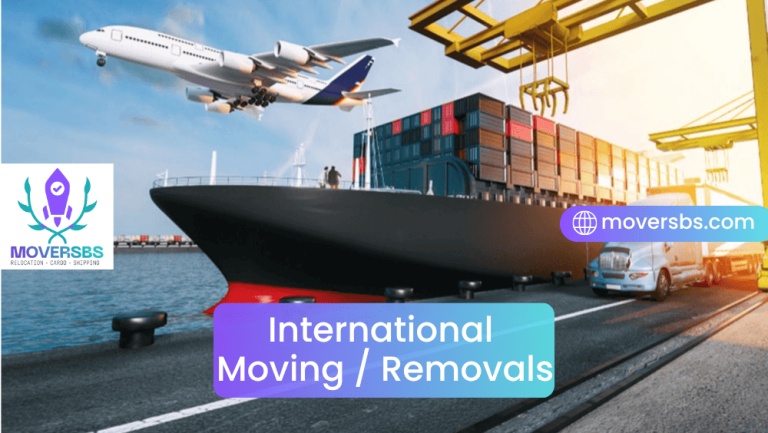
When sending household goods to Portugal, you’ll choose Full Container Load (FCL) or Less than Container Load (LCL) for sea freight, or opt for air freight if speed matters.
Sea Freight Options
- FCL (20ft or 40ft): Your own container, sealed at origin and opened at your new home. Faster at the port, fewer handling steps, best for 20m³+.
- LCL: Your items share a container. You pay only for space used; expect extra handling and slightly longer timelines.
Air Freight
- Best for essentials you need immediately: documents, laptops, kids’ supplies, work gear.
- Pack carefully. Airlines apply strict dimensional weight rules.
Major Ports & Gateways
- Port of Lisbon and Port of Leixões (Porto) handle most household shipments.
- Faro (Algarve) often receives via Lisbon then trucks south.
- Madeira and Azores involve feeder services; plan accordingly.
Customs & Duty on Household Goods
Most relocations qualify for duty-free import of used personal effects, provided you meet criteria such as proof of previous residence outside Portugal and no resale intent. Requirements typically include:
- Passport and visa/residence documentation.
- Inventory list (detailed, signed).
- Proof of prior residence abroad (utility bills, lease, employer letter).
- Tax number (NIF) and a Portuguese address (temporary is fine).
- Arrival timeline: Import within a specified window after you arrive.
Prohibited & Restricted Items (Common Examples)
Category | Examples |
Prohibited | Illegal drugs, counterfeit goods |
Restricted | Firearms, ammunition, certain plants/seeds |
Controlled | High-proof alcohol, tobacco over limits, cultural heritage items |
Tip: Declare honestly. Portuguese customs are fair, yet they expect transparent inventories and values.
Insurance: Protect What Matters
Even with the best packing, international transit involves multiple handoffs. Therefore, opt for door-to-door marine insurance. Two common models:
- Total Loss: Covers if the entire shipment is lost. Lower premium, limited coverage.
- All-Risk: Covers itemized loss or damage. Slightly higher cost, far better protection.
Complete a valued inventory including serial numbers for electronics and appraisals for high-value items. Photograph fragile pieces before packing.
Packing Standards You Should Expect
Professional movers in Portugal use export-grade materials:
- Double-walled cartons, wardrobe boxes, and picture cartons.
- Custom crating for art, marble, glass, and antiques.
- ISPM-15 compliant wood for any crates or pallets.
- Barcoding/scanning at pickup and delivery.
Additionally, insist on condition reports at origin and at destination. You’ll want the same labeling on both ends.
Renting or Buying in Portugal
Rental Market Snapshot
City/Region | 1-Bed Central | 3-Bed Family | Notes |
Lisbon | €1,100–€1,800 | €1,900–€3,200 | Most competitive |
Cascais | €1,300–€2,100 | €2,200–€3,600 | Family favorite |
Porto | €900–€1,500 | €1,500–€2,600 | Excellent value |
Algarve (varies) | €800–€1,400 | €1,400–€2,500 | Seasonal swings |
Braga/Coimbra | €600–€1,000 | €1,000–€1,800 | Budget-friendly |
Seasonality matters: Prices climb in spring/summer and dip slightly in autumn/winter.
Buying Property
Foreigners can freely purchase Portuguese property. You’ll want:
- A NIF.
- A local bank account.
- A promissory contract (CPCV) and an independent solicitor.
- Due diligence on licenses, energy certificate, and condominium fees.
Because closing processes are formal, factor 6–10 weeks for a straightforward purchase.
Banking & the All-Important NIF
The NIF—your Número de Identificação Fiscal—is crucial. You need it to rent, connect utilities, buy a car, or sign a phone plan. Many obtain it before arrival via a fiscal representative; others apply in person at a Finanças office once in Portugal.
Opening a bank account becomes easier with your NIF, passport, proof of address, and sometimes proof of income. Portuguese banks support modern online banking, SEPA transfers, and widely accepted Multibanco cards.
Healthcare: Public, Private, or Both?
Portugal’s SNS public healthcare system is reliable and affordable. After residence registration, you can obtain an SNS number and register with a local Centro de Saúde. Waiting times in busy districts can stretch; thus many expats add private health insurance to access faster appointments and English-speaking specialists. Premiums remain competitive compared with North America or other parts of the EU.
Prescription tip: Bring your medical history and a translated prescription list. Doctors appreciate accurate dosages and brand/generic equivalents.
Schools & Childcare
You’ll find three broad choices:
- Public Schools (Escolas Públicas): Free, Portuguese-language instruction, strong community integration.
- Private Portuguese Schools: Fee-paying, smaller classes, hybrid language options in some cases.
- International Schools: British, American, IB curricula are available in Lisbon, Cascais, Oeiras, and Porto.
Apply early—popular international schools maintain waitlists. For daycare (creche) and preschool (pré-escolar), enroll months in advance, especially in Lisbon/Cascais.
Driving, Transport & Mobility
- Driving Licence Exchange: Many national licences can be exchanged without a test within the official window after residence registration. Book appointments early.
- Car Import: Possible but paperwork-heavy and may involve vehicle tax; weigh the benefits versus selling before departure.
- Public Transport: Lisbon and Porto offer modern metro systems, trams, buses, and suburban trains. Discounted monthly passes lower costs further.
- Biking & Scooters: Coastal cities provide growing bike lanes; helmets recommended.
Everyday Costs (Monthly Estimates)
Category | Single Professional | Couple | Family of 4 |
Rent (Lisbon apt) | €1,300 | €1,600 | €2,500 |
Utilities & Internet | €150 | €180 | €220 |
Groceries | €220 | €350 | €600 |
Transport Passes | €40 | €80 | €120 |
Mobile Plans (2 lines) | €25 | €40 | €60 |
Private Health Insurance | €45–€80 | €90–€160 | €200–€360 |
Budget check: Costs drop outside Lisbon/Cascais and in northern cities like Braga or Guimarães.
Taxes & Administrative Basics
Even before you file, Portugal expects newcomers to understand a few basics:
- Tax Residency: Usually triggered by spending 183+ days/year in Portugal or having a habitual residence there.
- Double Tax Treaties: Portugal maintains treaties with many countries to avoid double taxation.
- NIF: Anchor every contract and transaction to your NIF.
- Social Security (NISS): Required if you’re employed or self-employed in Portugal.
Because tax regimes evolve, consult a qualified Portuguese accountant as soon as you secure residence. Accurate structuring at the outset can save you money and headaches later.
Mobile, Internet & Utilities
- Mobile: Competitive SIM and eSIM plans with generous data.
- Internet: Fibre connections are common in cities; rural coverage improves year by year.
- Utilities: Electricity, gas (where available), and water services activate quickly once you submit your NIF, ID, and address.
Hack: Bundle mobile and home internet for better monthly rates.
Pets: Bringing Furry Family
Portugal welcomes pets with standard microchip, rabies vaccination, and pet passport/health certificate requirements. Airlines may limit pet counts per flight, so book early. At arrival, officials review documentation; afterwards, register with a local vet and update the microchip database.
How We Make Your Move Easier
As full-service international movers, we coordinate everything:
- In-home or virtual survey of your inventory.
- Door-to-door packing, export wrapping, and custom crating.
- International shipping (sea or air) with tracking.
- Customs clearance support and paperwork guidance.
- Delivery, unpacking, and debris removal in Portugal.
- Short- and long-term storage, if your home isn’t ready yet.
- Settling-in add-ons: airport pick-up, home search, bank/NIF assistance, school advice, and utility setup.
Because every family is different, we tailor services and timelines to your budget and urgency.
Budgeting Your Move (Worked Example)
Scenario: 2-bedroom apartment, 20 m³ shipment, Lisbon destination.
- Survey & packing: €1,200–€1,800
- Sea freight (door-to-door): €2,800–€4,200
- Insurance (all-risk, declared value €30,000): €300–€550
- Destination services (customs, handling, delivery): €700–€1,200
- Estimated total: €5,000–€7,700
Add flights, initial accommodation, deposits, and administrative fees for a complete picture.
Documents Checklist
Print this and keep it handy:
- Passport, visa, and residence documentation
- NIF (or application documents)
- Inventory list with values
- Insurance certificate
- Marriage/birth certificates (certified copies)
- Medical & immunization records
- School transcripts and letters of recommendation
- Pet records (microchip, vaccinations)
- Power adapters and device serial numbers list
Common Mistakes—and How to Avoid Them
- Leaving the NIF too late: Without it, rentals and utilities stall. Apply early.
- Underinsuring: Replacing goods internationally costs more; insure accordingly.
- Packing liquids and perishables: These often breach rules and cause leaks.
- Ignoring seasonality: Summer shipments and rentals book fast—reserve earlier.
- Skipping condition reports: Insist on them at both origin and destination.
- No contingency time: Build buffer days for customs or port congestion.
- Driving licence timing: Exchange your licence within the official window to avoid extra exams.
Final Thoughts
Moving to Portugal should feel exciting, not exhausting. With the right plan, expert international removal support, and a clear timeline, you’ll arrive with confidence, unpack quickly, and start enjoying the cafés, coastline, and community that drew you here in the first place. Whenever you’re ready, request your tailored moving plan—survey, quote, and timeline—and we’ll take it from there.
Ready to Go?
Tell us your origin, shipment size, and ideal arrival date. We’ll provide a precise door-to-door quote, secure packing dates, and handle the entire move—so your first day in Portugal begins with a coffee, not a checklist.
FAQs on “Moving to Portugal”
A 2-bed shipment (≈20 m³) might land between €5,000–€7,700 door-to-door with insurance. Prices vary by origin and season.