International Cargo Shipping
When your products or personal cargo need to cross borders, you can’t afford guesswork. Routes change, rates move, and one missing document can hold your whole shipment at the port. That’s exactly why Movers BS offers complete International Cargo Shipping solutions that join planning, transport and customs into one simple flow.
Whether you’re shipping a few pallets, a full container, or personal cargo overseas, we help you move it in a way that’s safe, cost-aware and actually understandable.
What Is International Cargo Shipping?
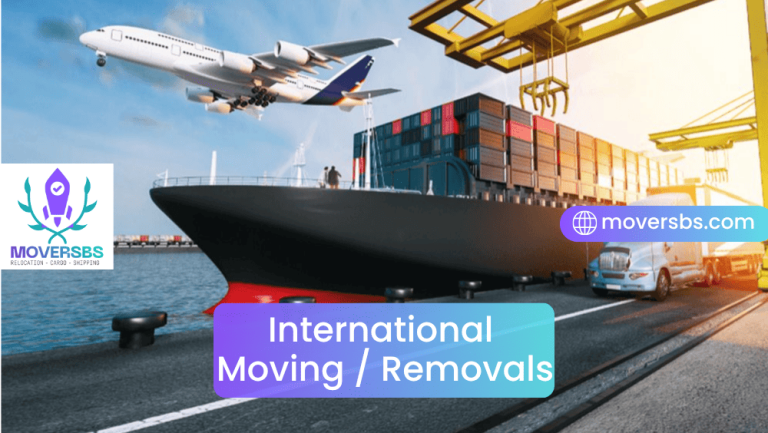
International Cargo Shipping is the movement of goods from one country to another using sea freight, air freight, and sometimes road or rail. Yet, in real life it’s more than just booking a vessel or a flight.
With Movers BS, an international cargo shipment usually includes:
Pickup from your warehouse, factory or home
Export packing and palletizing (if needed)
Booking of sea cargo or air cargo
Customs documentation and coordination
Delivery at destination – door-to-door or port-to-port
So instead of juggling multiple agents, you work with one international cargo shipping company that connects all the pieces for you.
Important keywords we cover throughout this page:
international cargo shipping, sea cargo shipping, air cargo shipping, FCL, LCL, door to door cargo, commercial cargo shipping, personal effects cargo.
Why Choose Movers BS for International Cargo Shipping?
Lots of providers can give you a rate. However, not everyone will explain clearly what you’re paying for or what risk you are taking. Movers BS tries to act more like your cargo partner than just a seller of freight.
With our International Cargo Shipping service, you get:
A dedicated cargo coordinator who understands your routes and products
Honest advice on sea vs air, and FCL vs LCL, not just the highest-margin option
Help with paperwork and compliance, so you don’t run into easy-to-avoid delays
Regular updates that make sense, instead of cryptic port codes and abbreviations
We work with both business shippers and private customers, so we know how to talk logistics in simple language, not just in jargon.
Types of Cargo We Ship Internationally
Because Movers BS is not limited to one industry, we handle a wide range of international cargo types:
1. Commercial Cargo
Finished goods for retail or wholesale
Industrial components and spare parts
Machinery, tools and equipment
Samples and trade-show shipments
2. E-commerce & Small Business Cargo
Parcel-level shipments consolidated into bigger loads
Regular international cargo shipping for online orders
Return shipments and replacement goods
3. Personal Effects Cargo
Boxes and personal items for expats and students
Partial house contents (smaller than a full relocation)
One-off personal shipments that still need proper customs attention
Each category has different needs around packaging, valuation and rules. We adjust our approach so your shipment moves in a way that fits your risk level and budget.
International Sea Cargo Shipping
For most large or heavy shipments, international sea cargo shipping is the backbone. It’s slower than air, but usually far more economical.
With Movers BS, you can choose:
FCL – Full Container Load (your own 20ft / 40ft container)
LCL – Less than Container Load (shared container, pay only for volume used)
Special equipment like open-top or flat-rack (for large machinery, if available on lane)
Advantages of Sea Cargo Shipping
Lower cost per m³ or per ton
Ideal for bulk shipments, stock replenishment, and non-urgent goods
Flexible container sizes for different volumes
International Air Cargo Shipping
When speed really matters, our air cargo shipping option comes in. You might pay more, but delivery time drops massively.
Air cargo works well for:
Urgent spare parts and emergency shipments
High-value or small-volume goods
Fashion, electronics and time-sensitive products
Documents or small parcels that can’t wait for the ship
We provide:
Airport-to-airport air cargo
Or full door-to-door air freight including pickup and final delivery
So you can mix and match: use air for priority items and sea for the rest, with Movers BS coordinating both sides.
FCL vs LCL – Choosing the Right Container Option
When your cargo travels by sea, the FCL vs LCL decision affects both cost and transit time.
FCL (Full Container Load)
You use an entire 20ft or 40ft container
Best for larger shipments or when you want maximum control
Less handling, less risk of damage and usually quicker terminal processing
LCL (Less than Container Load)
Your cargo shares container space with other shippers
You pay only for the cubic meters you use
Ideal for smaller volumes or irregular shipments
Approximate Volume Guide
| Cargo Volume (m³) | Typical Option | Notes |
|---|---|---|
| 1 – 5 m³ | LCL | Good for samples, small orders, personal boxes |
| 6 – 12 m³ | LCL or 20ft (case) | Decision depends on lane rates and cargo value |
| 13 – 28 m³ | 20ft FCL | Most cost effective for many business shipments |
| 29 – 55 m³ | 40ft FCL | Larger loads, multiple pallets, or more bulky items |
We don’t just push you into one box. Instead, we compare both options and explain why one makes more sense for your specific shipment.
Example Cost Guide for International Cargo Shipping
Every route is different, and rates move with fuel, seasons and market demand. However, some reference numbers make planning easier. The table below is illustrative only, using USD and average conditions.
Sample Freight-Only Ranges (Illustrative)
| Lane Example | Mode | Shipment Size | Indicative Range (USD)* |
|---|---|---|---|
| Asia → Europe | LCL | 3 m³ (approx. 500–700 kg) | 280 – 600 |
| Asia → Europe | FCL | 1 x 20ft container | 1,500 – 3,400 |
| Europe → North America | FCL | 1 x 40ft container | 2,800 – 5,700 |
| Europe → Middle East | Air Cargo | 300 kg chargeable weight | 1,200 – 2,300 |
| Intra-Asia short sea | LCL / FCL | 5–10 m³ or 20ft container | 500 – 1,700 |
*These figures are rough and normally exclude local origin/destination charges, customs duties, VAT, storage and special handling. Real quotes can be lower or higher.
When you ask Movers BS for a quote, we break it into:
International freight
Origin charges (pickup, packing, export docs)
Destination charges (port, terminal, delivery)
Optional insurance and extra services
So you see what you are paying for in each part of the journey.
How Our International Cargo Shipping Process Works
To keep shipping reliable, we map each cargo job into clear steps.
1. Cargo Inquiry & Basic Info
You tell us:
Origin and destination
What you’re shipping and how it is packed
Approximate weight and volume (or pallet / box count)
Desired timing and any deadline
We ask a few extra questions about cargo type (general, fragile, temperature-sensitive, etc.) and any special requirements.
2. Route Design & Quotation
Next, we design at least one practical route and often an alternative:
Sea cargo vs air cargo
FCL vs LCL, or direct vs transhipment services
Door-to-door or door-to-port setup
You receive a written quotation with key details, estimated transit time and validity dates.
3. Booking & Documentation Support
Once you confirm, Movers BS:
Books container space or air cargo capacity
Shares cut-off times for cargo readiness and documents
Helps you prepare commercial invoice, packing list, and other certificates
We check documents for common issues (wrong value, missing HS code, inconsistent weights) and ask you to correct them before they go to customs.
4. Pickup, Packing & Origin Handling
Depending on your needs, we can:
Collect cargo from your warehouse or supplier
Provide palletizing and shrink-wrapping
Arrange export inspection if mandatory for your commodity
Then we move the cargo to the port, terminal, or airport, and complete the origin formalities.
5. International Transport & Tracking
Your cargo moves on the booked ship or aircraft. During this stage, our team:
Monitors the vessel or flight status
Updates you when the cargo departs, reaches transhipment ports, or arrives
Flags any schedule changes and new ETAs
So you stay in the loop, instead of hearing nothing and hoping for the best.
6. Customs Clearance & Destination Handling
At the destination, our local partners handle:
Import customs procedures, based on documents you provide
Payment of port or airport charges (if included in service)
Coordination of any examination, X-ray or inspection
After customs release, your cargo becomes ready for final delivery or pickup.
7. Final Delivery & After-Service
If you choose a door-to-door international cargo shipping package, we:
Deliver to your warehouse, office, or home
Obtain proof of delivery
Help with any claim paperwork if transit insurance needs to be used
We also review regular shippers’ jobs to improve routes, frequency and cost over time.
Extra Services Alongside International Cargo Shipping
Because your shipment is only part of your business, not all of it, we provide supporting services that reduce your workload.
1. Cargo Insurance Assistance
We help arrange cargo insurance that fits the nature and value of your goods. This protects you better than relying on limited carrier liability alone.
2. Packing & Crating
For fragile or high-value items, we can arrange:
Custom wooden crates
Heavy-duty cartons and internal bracing
Special labelling and handling instructions
3. Storage & Consolidation
If your suppliers ship at different times, we can:
Consolidate multiple lots into one export shipment
Provide short-term storage between production and sailing
4. Compliance Advice (Non-Legal)
We share practical know-how about:
Basic dangerous goods (DG) rules
Restricted products and dual-use items
Labelling and marking good practice
We don’t replace your legal team, but we do share what we see every day on the ground.
FAQs – International Cargo Shipping
International cargo shipping is the process of transporting goods from one country to another using modes like sea freight, air freight, and sometimes rail or road. It includes documentation, customs procedures and physical movement of the cargo.
Costs depend on:
Mode of transport (sea vs air)
Weight and volume (or container size)
Trade lane and distance
Fuel and seasonal surcharges
Local handling charges at origin and destination
At Movers BS, we show you freight, origin and destination costs separately, so you see exactly how the price is built.
In everyday language, cargo and freight mean almost the same. Cargo usually refers to the goods themselves, while freight sometimes means the charge for moving those goods. In practice, we use both terms for international cargo shipping services.
Use air cargo shipping when:
Delivery time is critical
Shipment volume is relatively small
Value per kg is high
Sea delays would hurt your business more than extra freight cost
Otherwise, sea cargo shipping is normally the more economical choice.
Common documents include:
Commercial invoice
Packing list
Bill of lading (sea) or air waybill (air)
Certificate of origin and any other certificates (if needed)
Licenses or permits for controlled items
Your Movers BS coordinator will send you a tailored list for your shipment.
FCL (Full Container Load): You rent a full container just for your cargo.
LCL (Less than Container Load): Your shipment shares a container with other shippers.
FCL is better for larger loads and usually faster; LCL is good for small or medium volumes where a full container would be half empty.
Transit time depends on the route and mode:
Sea cargo on common long-distance lanes: roughly 3–6 weeks port-to-port
Air cargo between major hubs: sometimes 2–7 days airport-to-airport
Door-to-door timing will be longer because of customs and local deliveries at both ends.
Yes, you can ship personal effects cargo, such as boxes with clothing, books, or household goods. However, customs rules differ from commercial shipments, and you may need extra documents to prove the items are for personal use. Movers BS can guide you through that process.
Technically, you can try booking directly with some carriers, but most shippers use a freight forwarder like Movers BS because:
We know different carriers and options
We manage documents and customs coordination
We handle local handling and delivery
This saves you time and reduces the chance of costly mistakes.
Usually, cargo insurance is not automatically included. It is offered as a separate option, because coverage depends on the value, nature and route of your goods. We always recommend insurance, especially for high-value or fragile cargo.
Yes. For both sea cargo and air cargo, we provide tracking updates with major milestones: departure, transhipment, arrival and delivery. While exact real-time GPS for every truck or container isnt always available, you still know where the shipment stands in the overall process.
Yes. Certain items are restricted or treated as dangerous goods (DG). These include chemicals, batteries, flammable materials, explosives and some gases. Shipping them without proper declaration is illegal and unsafe. Always tell us what you are shipping so we can advise correctly.
Door-to-door international cargo shipping means we arrange pickup at your starting address, manage the main international leg, and then deliver to the final address abroad. You don’t have to organize port or airport handling yourself.
You can measure the length, width and height of each box or pallet, then multiply (L × W × H) and convert to cubic meters. If that sounds confusing, just send us dimensions and counts; the Movers BS team will calculate the total volume for you.
Yes. LCL sea freight and consolidated air cargo options are made for smaller shipments like samples or small order quantities. The cost per unit can be higher than huge FCLs, but it still lets you reach global customers without filling an entire container.
If customs places your international cargo shipment on hold, they may need extra documents, inspection, duty re-check, or clarification. We coordinate with the broker or local partners, inform you what they want, and help you respond as fast as possible. Sometimes it causes delay, but proper communication usually solves it.
Yes. Movers BS handles international moving for households and international cargo shipping for commercial loads. That means we can coordinate your personal shipment and your business cargo at the same time, if that’s helpful for you.
We work with everyone: startups, small e-commerce brands, medium exporters, and larger companies. In fact, smaller shippers often benefit most from having a reliable partner who explains things clearly and helps avoid rookie mistakes.
Yes, you can use your own boxes, pallets or crates, as long as they are sturdy and suitable for international transport. However, we may recommend improvements if we see risk – for example, additional shrink-wrap, corner protection, or better pallets. Weak packaging can create alot more cost later if damage occurs.
Simply contact Movers BS and share:
Origin and destination city/country
Type of goods and HS code if you know it
Approximate weight and dimensions
Preferred shipping date and mode (if you have a preference)
We’ll respond with a tailored international cargo shipping quote, explain your options in plain words, and help you choose the mix of cost and speed that fits your business or personal needs.