Moving to Germany
Removels - Relocation - Cargo
Moving to a new country can feel like a big deal, but it doesn't have to be. If you have the right plan, your move to Germany will be a clear, step—by—step process that is organized, on time, and within your budget. We go over every important step in this guide, from choosing international movers to deciding between air freight and sea freight (FCL/LCL), getting ready for customs clearance, setting up health insurance, and moving to Berlin, Munich, Frankfurt, Hamburg, Cologne/Düsseldorf, or Stuttgart. We also include practical cost—ranges, tables you can print, and an arrival checklist.

12,000+ Reviews 4.8 Rating
1) Why Germany Keeps Attracting Global Talent
Germany blends strong wages, social security, and efficient public services. Moreover, cities work well: transit runs on time, recycling rules make sense and parks, bike lanes, and family amenities are everywhere. Because the rules are transparent, your move benefits from structure—visas line up with shipping to Germany, customs steps follow a known order and utilities connect without drama. As a result, you can spend your energy on life, not logistics.
Top draws at a glance
- Central EU location for business and weekend travel
- Skilled—worker demand in engineering, IT, healthcare, finance, and green tech
- Stable tenancy rules and consumer protections
- High-quality schools and universities
- World-class healthcare and insurance frameworks
2) The Smart Timeline for International Removals
When you book early, everything gets easier—quotes stay competitive, shipment windows stay wide, and delivery targets stay realistic. Use this timeline to steer your international move.
| Phase | When | What You Do | What We Do |
| Research & Quotes | 16–12 weeks out | Shortlist international movers, schedule a survey, compare FCL/LCL vs air freight | Conduct pre-move survey, issue transparent quotes |
| Documentation | 12–8 weeks out | Gather passports, work contracts, inventory, pet records | Advise on customs clearance packets; confirm transit insurance |
| Booking | 8–6 weeks out | Confirm dates, pay deposit, declutter | Reserve packing crew, order crates, block sailing/flight space |
| Packing & Export | 2–1 weeks out | Separate “open-first” essentials | Pack, label, create inventory, load, export-clear |
| Transit | 1–5 weeks | Track shipment; arrange temporary housing | Monitor carrier milestones; pre-clear at destination |
| Arrival & Delivery | Landing week | Complete Anmeldung, open bank account, get SIM | Import-clear, deliver, unpack, remove debris |
| Settling-In | Weeks 1–4 | Health insurance, utilities, driver’s license swap | Optional settling-in services and handyman support |
3) Shipping Options: Sea vs Air (and How to Mix Them)
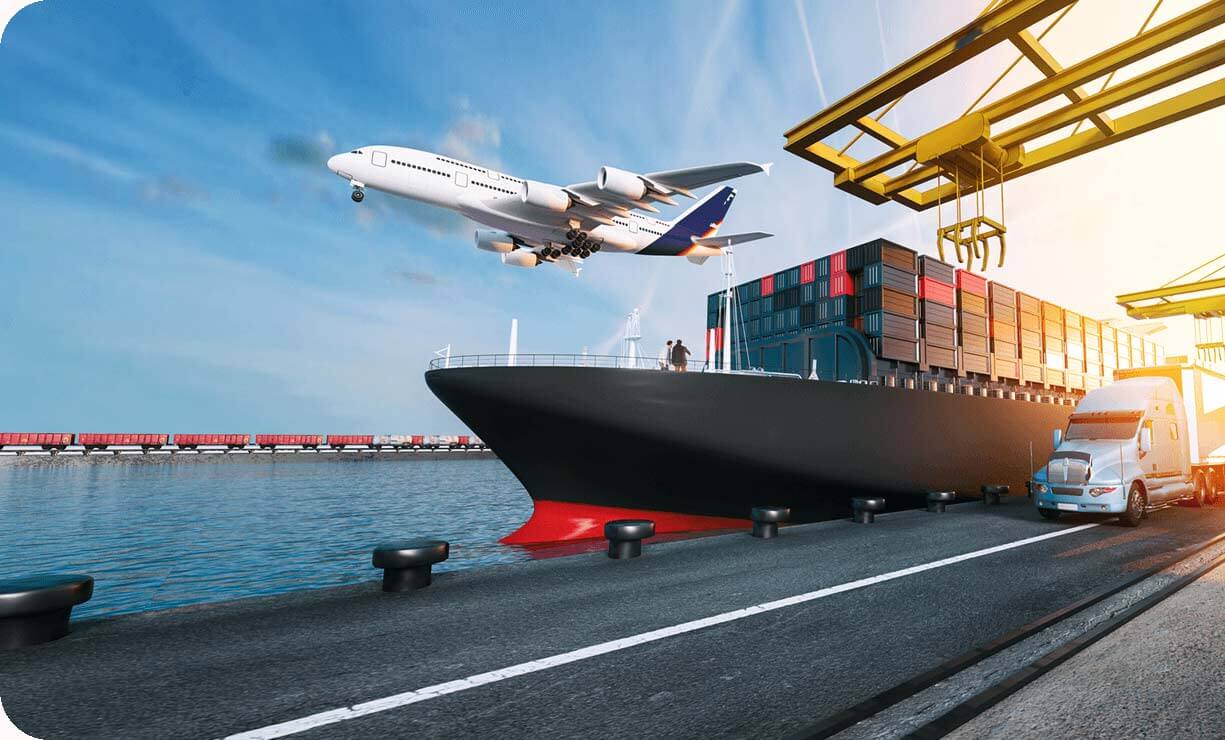
Choosing sea—freight or air freight depends on your volume, budget and speed. Often, families mix modes: a small air shipment for urgent items and a larger sea shipment for furniture and bulk boxes.
3.1 Sea Freight (FCL/LCL)
- FCL (Full Container Load) — You get your own container (20’ or 40’). It suits 3—bedroom+ homes, higher—value items, or strict timelines. Because loading and sealing occur at origin, handling stays minimal, which reduces risk.
- LCL (Less than Container Load) — You share container space. Costs stay lower for smaller volumes (typically <15–20 m³). Transit can be a bit longer due to consolidation/deconsolidation, yet it still offers strong value.
3.2 Air Freight
- Speed: Typically a few days in the air plus handling at both ends.
- Use case: Essentials, baby gear, critical workstations, and seasonal clothing.
- Downside: Price per kilo remains higher than ocean freight.
3.3 Side-by-Side Comparison
| Mode | Typical Volume | Transit Window* | Relative Cost | Best For |
| Air Freight | 1–3 m³ | ~5–12 days end-to-end | $$$$ | Urgent essentials |
| LCL Sea | 2–15 m³ | ~4–8 weeks | $$ | Cost-efficient partial moves |
| FCL Sea (20’) | 20–28 m³ | ~4–7 weeks | $$$ | 2–3 bedroom households |
| FCL Sea (40’) | 40–60 m³ | ~4–7 weeks | $$$ | 4+ bedroom households |
*Transit windows vary by origin, carrier, and season. We’ll guide you on realistic buffers.
4) Estimated Moving Costs to Germany (Transparent Ranges)
Costs depend on origin, volume, mode, seasonal capacity, access issues, and insurance selection. The ranges below help you budget sensibly; we’ll tailor a precise quote after a pre-move survey.
4.1 Door-to-Door Household Goods (Illustrative)
| Origin Region → Germany | Studio/1-Bed (LCL/Air mix) | 2–3 Bed (20’ FCL) | 4–5 Bed (40’ FCL) |
| North America | €2,400–€5,900 | €6,800–€9,800 | €9,900–€14,900 |
| UK & Ireland | €1,700–€4,200 | €4,900–€7,400 | €7,500–€11,800 |
| Middle East | €2,900–€6,700 | €7,400–€10,800 | €10,900–€15,900 |
| Asia-Pacific | €3,100–€7,900 | €8,300–€12,400 | €12,700–€18,900 |
| Africa | €3,400–€8,800 | €9,100–€13,300 | €13,600–€19,900 |
| Latin America | €3,600–€9,200 | €9,400–€13,900 | €14,100–€20,500 |
What’s included: export—packing, materials, basic dismantling, lift-van/crating as needed, origin and destination handling, ocean/air freight, import clearance, standard delivery to residence and debris removal.
What may add cost: hard access (stairs, long carry), parking permits, storage, shuttles, customs exams, specialized crating (art, piano), remote areas.
4.2 Typical First-Month Living Setup
| Category | Berlin | Munich | Frankfurt | Hamburg |
| 1-bed rent (Kaltmiete) | €1,050–€1,450 | €1,400–€1,900 | €1,200–€1,700 | €1,150–€1,600 |
| Utilities (Nebenkosten)* | €180–€260 | €190–€280 | €180–€260 | €180–€260 |
| Internet & Mobile | €45–€80 | €45–€80 | €45–€80 | €45–€80 |
| Public Transport Pass | €60–€95 | €60–€95 | €60–€95 | €60–€95 |
| Groceries (per adult) | €220–€320 | €230–€340 | €230–€330 | €220–€320 |
*Utilities vary by building efficiency and usage.
5) Documents and Customs: How to Clear Smoothly
To import household goods as personal effects, you typically demonstrate that you’re moving residence to Germany and that your items are used. Because customs—officials rely on clarity, complete paperwork speeds up clearance.
Core documents checklist
- Passport(s) and appropriate visa or residence proof
- Detailed inventory (English or German), signed and dated
- Proof of residence in Germany (e.g., Anmeldung or lease)
- Proof of previous residence—abroad (e.g., lease, utility bills, de—registration where applicable)
- Employment or assignment letter / university enrollment (if relevant)
- Power of attorney for your customs broker (we provide the template)
Commonly restricted or controlled
| Category | Example | Tip |
| Weapons & Ammunition | Firearms, certain knives | Seek permits; most personal shipments exclude them |
| Cultural Goods | Antiques, artworks | Provide provenance; we’ll advise on export/import rules |
| Plant/Animal Products | Seeds, soil, ivory | Expect strict controls or prohibitions |
| Alcohol/Tobacco | Larger quantities | Declare; duties/taxes may apply |
| Medications | Prescription drugs | Carry scripts and original packaging |
Because rules evolve, we validate current requirements before packing day and pre-clear your file where possible.
6) Packing, Protection, and Insurance (No Corners Cut)
We pack to export standard with reinforced cartons, edge guards, and ISPM-15 wood for crates. Fragile items—artwork, glass, instruments—receive custom crating. Every box gets a barcode and line item in the digital inventory, so you can track what’s where. Additionally, we recommend all-risk transit insurance based on declared value; it shields against the unexpected throughout door-to-door handling.
Pro tip: Split your shipment intentionally:
- Air box: important documents, laptops, kids’ essentials, two weeks of clothing, cookware starter kit.
- Ocean load: furniture, bulk clothing, books, appliances compatible with EU power.
7) Visas and Residence: The Practical Overview
EU/EEA/Swiss citizens move freely but still complete Anmeldung after arrival.
Skilled professionals often use the EU Blue Card or national work visas.
Students obtain a student visa, then register locally.
Family members use family reunion routes where eligible.
Because consulate slots can fill quickly, schedule applications early. Meanwhile, we align your shipment timetable with expected entry dates, so goods arrive when you do.
8) First Ten Days in Germany: Administrative Must-Dos
- Anmeldung (Address Registration) – Book an appointment with the Bürgeramt; bring— passport, landlord confirmation (Wohnungsgeberbestätigung) and lease.
- Steuer—ID (Tax ID) – Arrives by post after Anmeldung; hand it to your employer.
- Health Insurance – Choose public (gesetzlich) or private (privat) depending on eligibility and income.
- Bank Account (Girokonto) – Bring passport, Anmeldung, and employment letter if you have one.
- Mobile & Internet – Pick a plan and schedule installation; some fiber installs require lead time.
9) Housing and the Rental Dossier
In competitive markets, documentation wins apartments. Prepare a tidy package:
- Passport copy
- Employment contract or offer letter
- Recent payslips or bank statements
- SCHUFA report (or employer letter if new to Germany)
- References from previous landlords
- Completed application forms (we’ll provide sample formats)
Glossary you’ll see:
- Kaltmiete — base rent (cold rent)
- Nebenkosten — operating costs (heating, water, waste)
- Warmmiete — base rent plus operating costs
- Mietkaution — deposit (often 2–3 months Kaltmiete)
10) Cities at a Glance: Where Each One Shines
Berlin — Creative energy, startups, diverse—neighborhoods (Kreuzberg, Friedrichshain, Prenzlauer Berg).
Munich — High salaries, alpine access, premium—rents, strong automotive and biotech clusters.
Frankfurt — Finance, global flights, international schools; leafy suburbs for families.
Hamburg — Waterfront charm, logistics and media industries, grand parks.
Cologne & Düsseldorf — Art, fashion, trade fairs, lively waterfronts.
Stuttgart — Engineering powerhouses, vineyards, and excellent green spaces.
11) Transport, Driving, and Everyday Mobility
Germany’s public transit works well—S-Bahn, U-Bahn, trams, and buses. Monthly passes often save money, while cycling infrastructure expands yearly. If you’ll drive, check whether you can exchange your foreign driver’s license; deadlines and requirements depend on your issuing country/state. Furthermore, many families choose car-sharing for flexibility without ownership costs.
12) Healthcare and Insurance Basics
Most employees join public health insurance through their employer; high earners and certain professions can choose private. Public plans typically cover GP visits, hospital care, and standard prescriptions. Dental and vision may require supplemental coverage. Bring vaccination cards and prior medical records; we’ll ship originals in your air box for quick access.
13) Banking, Taxes, and Money Moves
Open a Girokonto after Anmeldung; expect SEPA transfers, debit cards, and app banking. Keep receipts for relocation expenses—some may qualify for allowances or deductions if your move ties to employment. Ask a tax professional about your specific case; meanwhile, we’ll document logistics costs clearly.
14) Telecom, Utilities, and the Little Things
Order internet early, since popular slots go fast. Electricity and gas switches are straightforward—submit meter readings on move-in day, and photograph meters for your records. Remember to register your Rundfunkbeitrag (broadcast license) for the household. Additionally, Germany sorts waste carefully; your building guidelines will show how to separate paper, organic, plastic/metal, and residual waste.
15) Pets on the Move
Germany welcomes pets that meet entry rules:
- ISO microchip
- Valid rabies vaccination (timing matters)
- EU Pet Health Certificate (or EU Pet Passport if already in the EU)
- Airline-approved carrier
- Building approval where required
We coordinate vet appointments, carriers, and airline check-in. Because pet comfort matters, we also suggest gradual crate acclimatization before flight day.
16) What We Do (So You Can Breathe)
We act as your orchestrator from survey to settling-in:
- Pre-move survey (video or in-home) and clear, itemized quote
- Export packing, barcoded inventory, and custom crating
- Sea freight (FCL/LCL) and air freight coordination
- Customs clearance Germany with broker liaison
- Door-to-door relocation, delivery, unpacking, and debris removal
- Temporary storage, handyman services, and school search assistance (on request)
Because we align visa timing, housing availability, and carrier schedules, you avoid the typical pain points that cause delays and extra costs.
17) Arrival Day Checklist (Print This)
- Keys and handover photos (entryway, kitchen, baths, balcony, parking spot)
- Meter readings (electricity, gas, water) with timestamps
- Anmeldung appointment confirmation and paper set
- Air shipment “open-first” box ready
- SIM card and mobile plan
- Temporary blinds/curtains and light bulbs (unfurnished flats may lack fixtures)
- Basic toolkit (screwdriver set, hammer, level, measuring tape)
- Power adapters (EU Type C/F, 230V/50Hz; check device compatibility)
- Cleaning starter kit and recyclable bags
- Snacks and hydration for the family and crew
18) Sample “Open-First” Box (What Actually Helps)
- Passports, visas, appointment letters
- Lease, insurance policies, school records
- Laptops, chargers, travel adapters
- 2 weeks of clothing, toiletries, towels
- Basic cookware, cutlery, plates, mugs
- Kettle or small coffee maker
- Children’s comfort items and bedding
- Medicine, prescriptions, and a compact first-aid kit
19) Final Word: Make the Complex Simple
A well-run international move isn’t magic; it’s method. When professionals handle—packing, shipping, customs, and delivery, you gain time for life. As you choose between air—freight and sea freight (FCL/LCL), weigh speed, volume, and value. Then align your Anmeldung date, lease start, and shipment ETA. Do that, and your move to Germany shifts from stressful to smooth.
FAQs on “Moving to Germany”
You typically need a passport, residence/visa proof, a signed inventory, proof of residence in Germany (e.g., Anmeldung or lease)and proof of prior residence—abroad.
Use air freight for urgent essentials and sea freight for the bulk. Many movers combine both to balance speed and cost.
Sometimes. If it qualifies as personal effects and you meet residence criteria, duties can be reduced or waived. Registration and emissions rules still apply.
Weapons/ammunition, certain knives, plant/animal products, and large quantities of alcohol/tobacco face strict controls. Cultural goods may require permits.
Yes. Germany requires coverage. You’ll pick public (gesetzlich) or private (privat) based on eligibility.
Usually within a short local deadline (often 14 days). Book appointments early to avoid fines or delays.
After Anmeldung, the Tax ID arrives by post at your registered address. Your employer will need it to process payroll.
Yes. Professional international removals providers prepare inventories, coordinate brokers, and manage customs clearance Germany end-to-end.
FCL gives you a dedicated container and faster, simpler handling—best for larger volumes. LCL shares container space and suits smaller loads at lower cost.
Enroll in intensive courses, practice daily, and engage locally. Even basic German unlocks smoother admin, rentals, and community life.