Moving to Netherlands
Removels - Relocation - Cargo
Relocating to the Netherlands should feel exciting, not chaotic. With the right plan—and the right international movers—your moving to Netherlands journey turns into a clear sequence: choose sea freight (FCL/LCL) vs air freight, prepare documents for customs clearance Netherlands, arrange municipal registration (BRP), secure your BSN, set up DigiD, and activate Dutch zorgverzekering (health insurance). This long-form, guide walks you through every step, while also giving you realistic cost tables, practical checklists, and insider tips that save time, money, and nerves.

12,000+ Reviews 4.8 Rating
1) Why the Netherlands—and Why Your Timing Matters
The Netherlands blends excellent infrastructure, strong salaries, and a famously bike-friendly lifestyle. Moreover, administration stays transparent and predictable when you follow the right order. Consequently, you can line up household goods shipping with the timing of your housing and visa, and you’ll land smoothly in Amsterdam, Rotterdam, The Hague, Utrecht, Eindhoven, or beyond.
Fast advantages
- Compact geography with fast trains and safe cycling infrastructure
- Clear immigration pathways for skilled workers and researchers
- Reliable public services, bilingual professionals, and widespread English
- Good schools, extensive daycare options, and child benefits for eligible families
- Pro-innovation economy: semiconductors, logistics, energy transition, and design
2) The Smart Timeline (From First Quote to First Bike Ride)
Starting early keeps quotes competitive and shipping windows flexible. Use this timeline to anchor your international removals plan.
Phase | When | You Do | We Do |
Research & Quotes | 16–12 weeks out | Shortlist international movers, schedule pre-move survey, compare FCL/LCL vs air freight | Survey (video/in-home), issue itemized quote |
Documentation | 12–8 weeks out | Gather passports, work contract/visa route, detailed inventory, pet papers | Build customs clearance Netherlands pack; check transit insurance |
Booking | 8–6 weeks out | Confirm dates and deposit; declutter decisively | Reserve crews and carriers; block sailing or flight space |
Packing & Export | 2–1 weeks out | Separate “open-first” air essentials | Export-pack, label, barcode, crate, load, export-clear |
Transit | 1–6+ weeks | Track shipment; secure short-stay housing | Monitor milestones; pre-alert destination handling |
Arrival & Delivery | Landing week | Register at gemeente (BRP), obtain BSN, set up DigiD | Import-clear, deliver, unpack, remove debris |
Settling-In | Weeks 1–4 | Choose zorgverzekering, open bank, get OV-chipkaart, pick GP | Optional storage, handyman, mounting, settling-in support |
3) Shipping Options: Sea vs Air (and When to Mix Them)
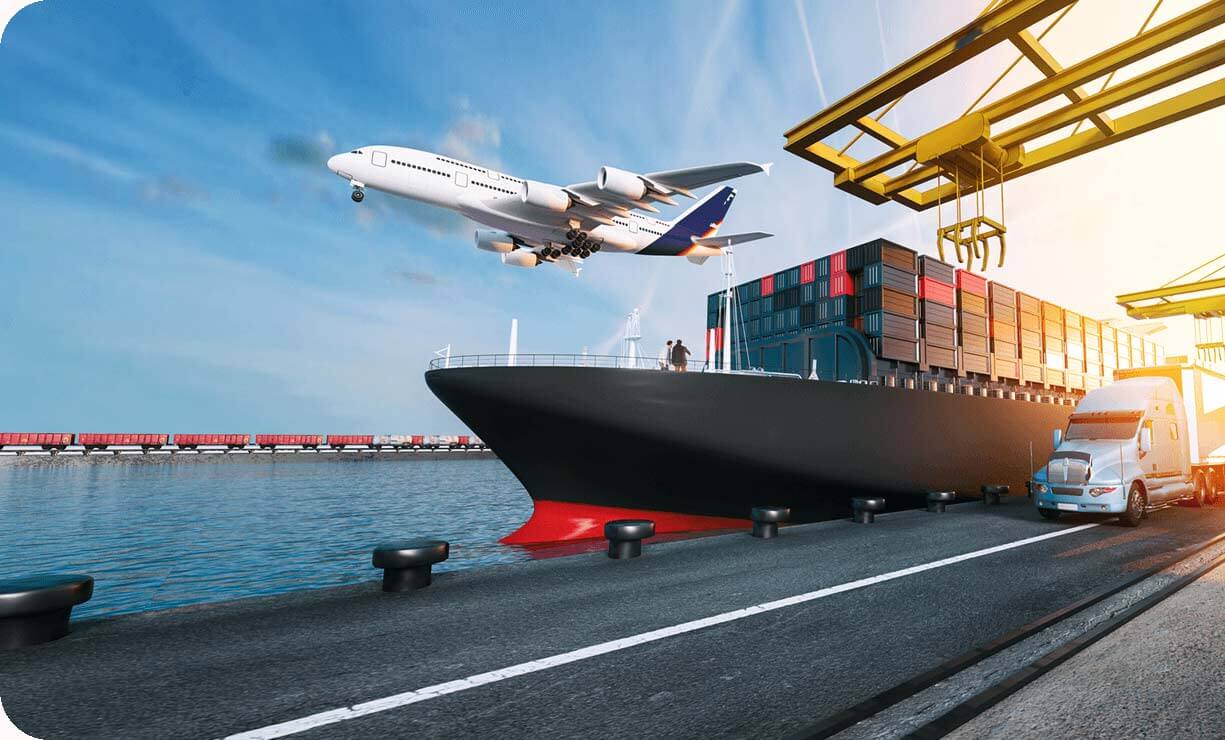
Choosing sea freight or air freight depends on volume, speed, and budget. Many families combine both: send urgent items by air and ship furniture and bulk boxes by sea.
3.1 Sea Freight (FCL/LCL)
- FCL (Full Container Load) — You get your own 20’ or 40’ container. Because we load and seal at origin, handling stays minimal and delivery windows remain predictable.
- LCL (Less than Container Load) — You share container space. It suits smaller volumes (often <15–20 m³). Consolidation and deconsolidation add a little time, yet cost-efficiency remains excellent.
3.2 Air Freight
- Speed: Often a few days in the air plus origin/destination handling.
- Use case: Laptops/workstations, baby gear, season-specific clothing, important documents, and starter kitchen kits.
- Note: Price per kilo exceeds ocean rates; deploy it strategically.
3.3 Side-by-Side Comparison
Mode | Typical Volume | Transit Window* | Relative Cost | Best For |
Air Freight | 1–3 m³ | ~4–10 days end-to-end | $$$$ | Urgent essentials |
LCL Sea | 2–15 m³ | ~4–8 weeks | $$ | Smaller loads, budget focus |
FCL Sea (20’) | 20–28 m³ | ~3–7 weeks | $$$ | 2–3 bedroom homes |
FCL Sea (40’) | 40–60 m³ | ~3–7 weeks | $$$ | 4+ bedroom homes |
*Windows vary by origin, season, and carrier. We’ll add realistic buffers at quote time.
4) Transparent Cost Ranges (Illustrative, Door-to-Door in EUR)
Actual pricing depends on origin, volume, season, access at both ends, and transit insurance choices. These ranges help you budget confidently; after a pre-move survey we’ll issue a precise, line-item quote.
4.1 Household Goods Shipping to the Netherlands
Origin Region → Netherlands | Studio/1-Bed (LCL/Air mix) | 2–3 Bed (20’ FCL) | 4–5 Bed (40’ FCL) |
North America | €2,300–€5,400 | €6,400–€9,600 | €9,800–€14,600 |
UK & Ireland | €1,500–€3,600 | €4,200–€6,800 | €6,900–€10,700 |
Nordics & EU (non-UK) | €1,600–€3,900 | €4,400–€7,100 | €7,300–€11,200 |
Middle East | €2,700–€6,200 | €7,100–€10,600 | €10,900–€15,800 |
Asia-Pacific | €2,900–€6,800 | €7,600–€11,500 | €11,800–€17,200 |
Africa | €3,200–€7,400 | €8,100–€12,200 | €12,500–€18,300 |
Latin America | €3,400–€7,800 | €8,600–€13,000 | €13,400–€19,100 |
Included: export packing, materials, dismantling/basic reassembly, origin/destination handling, main carriage (ocean/air), import formalities, standard delivery, unpack, and debris removal.
Possible extras: stairs/long carry, tight access, parking permits, storage, customs/border inspections, specialized crating (art, piano), and remote areas.
4.2 First-Month Setup by City (Indicative, EUR)
Category | Amsterdam | Rotterdam | The Hague | Utrecht | Eindhoven |
1-bed rent (inner ring) | €1,700–€2,400 | €1,250–€1,800 | €1,350–€1,900 | €1,400–€2,000 | €1,200–€1,700 |
Utilities (power/water/heat)* | €160–€230 | €150–€220 | €150–€220 | €150–€220 | €140–€210 |
Internet & Mobile | €40–€75 | €40–€75 | €40–€75 | €40–€75 | €40–€75 |
Transport Pass | €60–€100 | €55–€95 | €55–€95 | €55–€95 | €55–€95 |
Groceries (per adult) | €230–€320 | €220–€300 | €220–€300 | €220–€300 | €210–€290 |
*Energy markets change; insulation level and usage matter.
5) Customs & Documents: How to Clear Smoothly
Most newcomers import household goods as personal effects with relief from duties/taxes if they meet the criteria (e.g., transferring normal residence and used items). Because clear paperwork speeds up customs clearance Netherlands, completeness counts.
Core documents you should prepare
- Passport(s) and visa/residence evidence
- Detailed, signed inventory (English or Dutch) for household goods shipping
- Proof of residence in the Netherlands (tenancy/ownership) or intended residence
- Evidence of previous residence abroad (lease, utility bills, deregistration where relevant)
- Employer letter or assignment—when applicable
- Power of attorney for your customs broker (we provide the template)
Commonly controlled or restricted
Category | Examples | Guidance |
Food & Plants | Seeds, untreated wood | Declare or exclude; many items restricted |
Animal Products | Ivory, certain furs | Often prohibited or permit-heavy |
Weapons | Firearms, some knives/sprays | Licensing applies; most households exclude |
Alcohol/Tobacco | Large quantities | Duties/taxes may apply—declare |
Medicines | Prescription drugs | Carry scripts in original packaging |
Because rules can evolve, we validate the latest requirements before packing day and, where possible, pre-advise for faster clearance.
6) Packing, Protection & All-Risk Transit Insurance
We pack to export standard using double-walled cartons, edge guards, corner protection, and moisture-resistant wraps. Moreover, fragile items—artworks, mirrors, instruments—receive custom crates. Every carton carries a barcode that ties to a digital inventory, so you always know what’s where. We strongly recommend all-risk transit insurance based on declared value; it protects you through every handoff during door-to-door relocation.
Plan your split smartly
- Air essentials: laptops, chargers, adapters, vital documents, two weeks of clothing, compact kitchen starter, kid comfort items
- Sea bulk: furniture, books, sports gear, seasonal clothing, and compatible appliances (NL uses 230V/50Hz, Type C/F plugs)
7) Immigration Snapshot (Not Legal Advice)
Match your shipment ETA to your immigration timeline.
- Highly Skilled Migrant (HSM/kennismigrant) — Employer-sponsored pathways for qualified roles
- EU/EEA/Swiss citizens — Freedom of movement; still complete municipal registration
- Intra-Corporate Transferees, Researchers, Start-Up/Innovator — Specialist routes
- Students & Family members — Established options with clear documentation
Because processing times vary, we align shipping to Netherlands with visa readiness to avoid unnecessary storage.
8) First-Week Essentials (Do These Quickly)
- BRP Registration at the Gemeente — Register your address within local deadlines; bring passports and tenancy/landlord statement.
- BSN (Burgerservicenummer) — Issued after BRP; essential for salary, taxes, and healthcare.
- DigiD — Apply online to access government portals (taxes, healthcare, benefits).
- Zorgverzekering (Health Insurance) — Choose a basic plan (basisverzekering) within the legal timeframe after registering.
- Bank Account & iDEAL — Open a Dutch bank for seamless deposits and online payments; iDEAL dominates local e-commerce.
- OV-chipkaart — Tap-in/out for trains, trams, buses, and metro.
- GP & Pharmacy — Register with a huisarts (family doctor) near your home; bring medical records.
9) Housing in the Netherlands: How to Win Applications
The rental market moves fast. Therefore, arrive prepared with a polished dossier:
- Passport and residence evidence
- Employment contract/offer or assignment letter
- Recent payslips and bank statements
- Previous landlord/agent references
- Pet references (if applicable)
- Completed application forms
Glossary you’ll see
- Kaal / Gestoffeerd / Gemeubileerd — Unfurnished / semi-furnished (floors/curtains/appliances) / fully furnished
- Borg — Deposit (often 1–2 months)
- Servicekosten — Monthly building/service costs
- Huurtoeslag — Rent allowance for eligible lower-income households in regulated sectors (check criteria)
10) City Snapshots: What Each One Offers
Amsterdam — Canals, culture, startups, creative industries; higher rents; superb transit and biking.
Rotterdam — Europe’s major port; architecture, logistics, industry; good value neighborhoods.
The Hague (Den Haag) — International courts, embassies, NGOs; coastal living in Scheveningen.
Utrecht — University city with medieval core; central rail hub; strong family vibe.
Eindhoven — Tech and design powerhouse (Brainport); excellent schools and green suburbs.
Haarlem, Leiden, Delft — Charming historic towns with quick train rides into Amsterdam or The Hague.
11) Transport & Driving
The Netherlands runs on public transport and bikes. Rail links connect cities in under an hour; trams and buses fill the gaps. If you drive, check driver’s license exchange rules; many newcomers can exchange directly depending on origin. The road network is excellent, although city parking can be tight and permit-based. Consequently, many households rely on bikes, cargo bikes, and occasional car-sharing instead of full ownership.
12) Healthcare, Insurance & Everyday Wellness
The basic zorgverzekering covers GP visits, hospital care, and essential medications subject to deductibles (eigen risico). Many families add supplementary dental/physio coverage. Bring vaccination cards and medical histories; store them in your air shipment for quick access. Pharmacies (apotheek) handle prescriptions; the huisarts is your first point of contact for referrals.
Useful policies to consider
- Aansprakelijkheidsverzekering (AVP) — Personal liability insurance
- Inboedelverzekering — Contents insurance for your household goods
- Reisverzekering — Travel insurance for trips around Europe
13) Money, Taxes & the 30% Ruling (If Eligible)
After you open a bank, set up direct debits for rent and utilities. Employers withhold wage tax and social contributions. Moreover, some qualifying expatriates may access the 30% ruling, which provides a tax advantage for a limited period if strict conditions are met. We cannot advise on eligibility; however, we recommend discussing it with your employer and a Dutch tax advisor early.
14) Telecom, Utilities & Small Essentials
Book internet early; fiber or cable installs can book out. On move-in day, photograph meter readings (gas/electric/water/heat) with timestamps. Waste sorting varies by municipality; check plastics/paper/cardboard rules and pickup calendars. Additionally, purchase a sturdy bike lock and learn the local cycling rules—rings, junctions, and priority signs matter.
15) Pets on the Move (Plan Ahead)
The Netherlands welcomes pets that meet EU import rules. You’ll typically need microchip, valid rabies vaccination, and an EU Pet Health Certificate (or EU Pet Passport if already within the EU). Airlines require IATA-approved crates; some apartment associations request prior approval. We coordinate vet visits, airline bookings, and destination delivery as part of pet relocation support.
16) What We Handle—So You Can Breathe
From survey to settling-in, we orchestrate every moving part:
- Pre-move survey and transparent, itemized quote
- Expert export packing, barcoded inventory, and custom crating
- Sea freight (FCL/LCL) and air freight coordination
- Customs clearance Netherlands with broker liaison
- Door-to-door relocation with timed delivery, unpacking, and debris removal
- Temporary storage, handyman/furniture assembly, bike/bed setups, and school search assistance
Because we align visas, housing, and carrier schedules, you avoid needless storage and bottlenecks.
17) Arrival-Day Checklist
- Keys and handover photos (every room, balcony, storage, parking)
- Meter readings photographed (power/gas/water/heat)
- BRP registration appointment confirmation
- BSN and DigiD applications lined up
- Zorgverzekering choice started
- OV-chipkaart loaded; nearest stations mapped
- “Open-first” box unpacked (documents, devices, chargers, kettle, basic cookware)
- Temporary lights/curtains if the apartment is kaal
- Basic toolkit (screwdrivers, level, measuring tape)
- Two strong bike locks ready (if you plan to cycle)
18) Sample “Open-First” Air Box (What Actually Helps)
- Passports, visa letters, employment/assignment documents
- Laptops, chargers, Type C/F plug adapters, and a compact power strip
- Two weeks of clothing and toiletries per person
- Lightweight kettle, two mugs, a small pan, cutlery set, dish soap
- Sheets, towels, compact first-aid kit
- Prescriptions and a printed medication list
- Kids’ comfort items (soft toys, books), home Wi-Fi instructions
19) Figures That Keep You on Budget
- Typical blended move (air + sea) for a 2–3 bed: €7,000–€12,000 depending on origin and season
- Parking permits/suspensions for delivery: €50–€200+ depending on municipality and duration
- Basic health insurance (basisverzekering): often €120–€160 per adult/month (provider and deductible dependent)
- Newcomer mobile plan: €15–€35 per line/month (data-dependent)
20) Final Word: Make the Complex Simple
A smooth international move is not luck; it’s method. When professionals manage packing, overseas shipping to Netherlands, and customs, everything works in sequence. Align your visa steps with your lease start and shipment ETA. Then roll into Dutch life on time, on budget, and with your bike bell already ringing.
Ready to plan your move? Tell us your origin, target city, and timeline. We’ll craft a door-to-door relocation plan that protects your budget and delivers a calm landing in the Netherlands—on schedule and on your terms.
FAQs on “Moving to Netherlands”
Prepare passports, residence/visa proof, a detailed inventory, proof of Dutch residence (or intended residence), and evidence of previous residence abroad. We’ll supply the broker power of attorney.
Absolutely. All-risk transit insurance protects your shipment through packing, freight, clearance, and final delivery.
Usually yes, with microchip, valid rabies vaccination, and an EU Pet Health Certificate (or EU Pet Passport). Airlines require IATA-approved crates.
The Netherlands uses 230V/50Hz with Type C/F plugs. Many laptops/chargers are dual-voltage; heavy appliances from abroad may not be compatible.
A tax facility that may benefit certain incoming employees who meet eligibility criteria. Check with your employer and a Dutch tax advisor for current rules.