Relocating overseas and bringing your car with you, it is a major decision. Your car, or motorcycle, is more than chrome and rubber; it’s freedom, familiarity and often a costly investment. But international car shipping and overseas bike transport can seem complicated if you’ve never done it before.
In a comprehensive guide by Movers BS we will explain to you the ways, expenses, papers needed and how long it might take in addition to personal recommendation that can save your time and money!
What Is International Car & Bike Shipping?
International Car & motorcycle shipping is considered whenever the vehicle is moved to another country by Boat, airplane or a cross of ocean and land.
The majority of vehicles move by ocean transport sea going container or roll-on/roll-off (RoRo) vessels. RoRo ships are designed to carry cars, motorcycles, trucks and other wheeled cargo on ramps instead of cranes.
Table of Contents
ToggleCustoms rules and safety standards differ from country to country, so being able to understand vehicle export and import regulations is just as important as working the logistics. Get details on Moving to Germany.
Main Vehicle Shipping Methods
When you request quotes from Movers BS or any international vehicle shipping company, you’ll usually see one of these methods:
1. RoRo Car Shipping
With RoRo shipping (roll-on/roll-off):
- Your car or bike is driven or rolled onto the vessel, secured in a deck, and then driven off at destination.
- There is no individual container; your vehicle shares deck space with many others.
- This method is efficient and usually cheaper than container shipping, which is why automakers use it heavily.
RoRo works best if:
- Your vehicle is running and roadworthy.
- You don’t need to ship a lot of personal items inside it.
- You want a budget-friendly international car shipping option.
2. Container Car & Bike Shipping
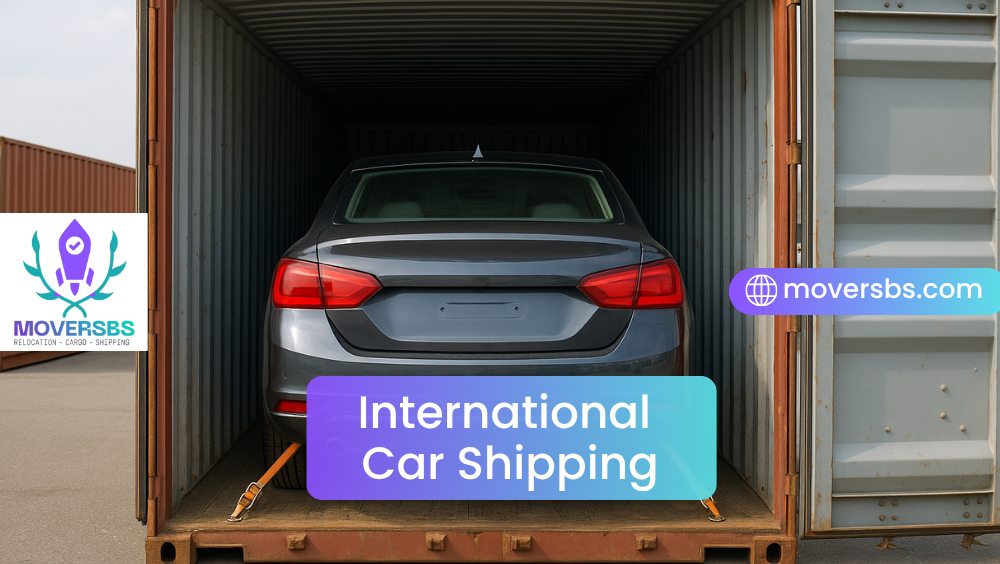
With container shipping, your vehicle goes inside a sealed steel container:
- 20-foot container – usually fits one car or 2–3 motorcycles.
- 40-foot container – fits two standard cars or a car + household goods.
You can choose:
- FCL (Full Container Load) – only your cargo in one container.
- LCL (Less than Container Load) – you share container space with other shippers.
Container shipping usually costs more than RoRo, but it offers:
- Extra protection from weather and salt air.
- Ability to load spares, luggage, or household items (subject to customs rules).
3. Air Freight for Cars & Motorcycles
Air freight is the fastest and most expensive option. It makes sense when you are:
- Shipping a luxury, race, or classic car.
- Transporting a high-value motorcycle for a rally or event.
- Working with tight deadlines.
For most everyday vehicles, ocean freight provides a better balance of cost and safety.
Typical International Car & Bike Shipping Costs
Exact prices vary by route, size, and season. However, industry data gives us realistic ranges.
Average Cost to Ship a Car Overseas
Across popular routes, international car shipping cost for standard cars typically ranges from USD 900 to USD 3,500 for RoRo or container service.
Average Cost to Ship a Motorcycle Overseas
For motorcycles, most shippers see a typical range of about USD 400 to USD 2,000, depending on destination, crate type, and method. )
Table 1 – Sample International Car Shipping Cost Ranges
| Route (Example) | Method | Estimated Cost (USD) | Notes |
| USA → Germany (Europe) | RoRo | $900 – $1,500 | Popular relocation lane; RoRo often cheapest. |
| USA → UAE (Dubai) | Container | $1,200 – $2,000 | Container preferred for high-value cars. |
| USA → Australia | RoRo | $1,000 – $1,800 | Longer distance; port fees add up. |
| UK → USA | Container | $1,300 – $2,300 | FCL or shared container options. |
| Canada → West Africa (e.g., Nigeria) | RoRo/Container | $1,500 – $2,800 | Varies greatly by port congestion and taxes. |
Table 2 – Sample International Bike Shipping Cost Ranges
| Scenario | Method | Typical Range (USD) | Notes |
| Standard motorcycle, port-to-port | Crated sea freight | $400 – $1,000 | Cheapest, takes 3–6 weeks. |
| Adventure / touring bike to another continent | Pallet / crate by sea | $1,000 – $2,000 | Often includes port & crating fees. |
| Urgent rally or race bike | Air freight | $2,000 – $3,000+ | Fastest but premium pricing. |
Important: These are illustrative estimates, not fixed quotes. For an accurate price, Movers BS collects your origin, destination, vehicle type, dimensions, and preferred method and then builds a tailored quote for you.
What Drives International Vehicle Shipping Costs?
Several variables combine to produce your final price. Understanding them helps you select the best option and avoid surprises.
- Distance & Route Complexity
Longer routes with multiple trans-shipments cost more due to fuel and handling. - Vehicle Size & Weight
- SUVs, pickups, and vans occupy more space than compact cars.
- Heavy touring bikes and trikes cost more than small scooters.
- Shipping Method
- RoRo car shipping is often cheaper than container.
- Dedicated containers and air freight sit at the premium end.
- Port & Terminal Fees
Destination charges can fluctuate with local labor costs, port congestion, storage, and customs complexity. - Customs Duties, Taxes & Registration Fees
Every country has its own import duties, value-added tax, and inspection fees. These costs are separate from shipping and can be substantial. - Season & Fuel Surcharges
Peak season, fuel price changes, or new port fees can raise costs across the board. - Service Level & Insurance
Door-to-door collection, enclosed inland transport, and full-coverage marine insurance all increase the price but lower your risk. Get details on Moving to Australia.
Essential Documents for International Car & Bike Shipping
Paperwork mistakes are one of the biggest causes of delays. Fortunately, the core vehicle shipping documents are similar across many routes.
Vehicle Export Documents
- Original vehicle title / registration
- Owner’s passport copy and contact details
- Lien holder authorization, if the vehicle is financed
- Bill of sale (for recently purchased vehicles)
Transport & Customs Documents
- Shipping booking confirmation from Movers BS or the carrier
- Bill of Lading (BoL) – issued once the vehicle is loaded
- Export declaration (often filed electronically with customs)
- Packing list if you are sending household goods in the same container
Import Documents at Destination
- Import declaration and local customs forms
- Proof of purchase value (for duties and taxes)
- Emission and safety certificates, if required
- Temporary import permits (for tourists or limited-stay vehicles)
At Movers BS, we guide you through the paperwork checklist line by line, so you submit the right forms to the right authority at the right time.
Step-by-Step: How International Car & Bike Shipping Works
To make the process less intimidating, here is a typical timeline when you book with a professional shipper.
1. Quotation & Planning
First, you share:
- Pickup and delivery cities or ports
- Vehicle make, model, and size
- Preferred dates and budget
Movers BS then recommends RoRo vs container, shows transit times, and gives you a transparent cost breakdown.
2. Booking & Document Collection
Next, you confirm the booking and send copies of:
- Title or registration
- ID and contact details
- Any finance or lien release letters
Our team checks requirements for both export and import customs and helps you prepare the forms.
3. Vehicle Inspection & Pre-Shipping Prep
Before shipping day, you:
- Clean the vehicle thoroughly (some countries require this to avoid soil contamination).
- Remove personal valuables and prohibited items.
- Photograph the car or bike from all angles to document its condition.
For bikes, you usually disconnect the battery and drain or reduce fuel according to carrier rules.
4. Inland Transport to Port
You can:
- Drive the vehicle to the port yourself, or
- Let Movers BS arrange enclosed or open carrier transport from your home or office.
5. Port Handover & Loading
At the port:
- The vehicle is inspected and checked against the booking.
- For RoRo, it is driven aboard and secured.
- For container shipping, it is strapped and blocked inside a container, often alongside a wooden or metal framework for extra safety.
6. Ocean Transit & Tracking
During the voyage, you receive tracking updates so you always know where your car or bike is.
7. Arrival, Customs & Delivery
Finally, at the destination port:
- The vehicle clears customs and any inspections or emissions tests.
- Movers BS or a local partner pays port fees on your behalf (if agreed).
- You collect the vehicle at the terminal or opt for door delivery to your new home.
How to Prepare Your Car or Motorcycle for Shipping
Good preparation prevents damage and delays.
For Cars
- Service check: Top up fluids and check for leaks. Fix any severe leaks before shipping.
- Fuel level: Keep it at about ¼ tank or less, as most carriers require.
- Remove add-ons: Take off roof racks, spoilers or any loose exterior accessories you can.
- Alarm systems: Do not have alarm or clear instructions on how to disarm.
- Spare keys: Give one complete set to the shipper and store one with you.
For Motorcycles
- Crate or pallet: Many lines require bikes to be strapped to a custom pallet or placed in a crate.
- Handlebars & mirrors: Turn or fold them in to reduce width.
- Battery & fuel: Disconnect the battery and reduce fuel to the specified level.
- Loose parts: Pack panniers, windscreens, and luggage securely or remove them.
Should You Ship or Sell? Quick Comparison
Sometimes it isn’t obvious whether international vehicle transport is better than selling your car and buying another one abroad.
Table 3 – Ship vs. Sell & Buy New
| Option | Pros | Cons |
| Ship your existing car/bike | Keep a familiar vehicle; known service history; may be cheaper for high-value or modified vehicles. | Shipping time, customs duties, and compliance costs. |
| Sell and buy at destination | No shipping or import costs; faster local mobility. | Uncertain used-car market, registration hurdles, and time spent searching. |
| Long-term rental / leasing | No ownership headaches; predictable monthly costs. | More expensive over long periods; limited customization. |
When you share your destination and vehicle value with Movers BS, we can help you run a rough cost comparison so you can decide logically instead of guessing.
Related Articles:
» How to Choose the Right International Moving Company?
» Step-by-Step Guide to Planning an International Move
» How Freight Forwarding Works in International Relocation?
» Guide to Packing Living Room & Decor Items for Sea Freight
» Comparing International Packers & Movers Quotes Effectively
Why Choose Movers BS for International Car & Bike Shipping?
Because international car & bike shipping is complex, the right partner matters. With Movers BS you get:
- End-to-end coordination – from home pickup to delivery abroad.
- Clear advice on RoRo vs container shipping and realistic transit times.
- Guidance on documents, duties, and local regulations so you stay compliant.
- Carefully vetted port partners, carriers, and customs brokers.
- Regular updates so you always know where your vehicle is.
Our goal is simple: make your vehicle relocation as predictable and stress-free as possible, while treating your car or motorcycle like it’s our own.
FAQs – International Car & Bike Shipping: A Complete Guide
1. How far in advance should I book international car shipping?
Most customers book 4–8 weeks before their preferred departure date. For popular routes or during peak season, earlier is better. This window gives enough time for documents, inspections, and port scheduling.
2. Is RoRo car shipping safe for my vehicle?
3. Can I put personal items inside my car or bike during shipping?
Rules vary by route and method. Some container services allow personal effects inside the vehicle or in the container, subject to customs restrictions. RoRo services typically require your car to be nearly empty, with only factory-installed items and mandatory tools. Movers BS will confirm what’s allowed for your specific shipment.
4. How much does it cost to ship a motorcycle compared with a car?
International shipping for motorcycles is usually cheaper compared to a full-sized car as motorbikes are smaller and lighter. The cost of transporting a bike, which riders can spend anywhere from $400 to $2,000 on for overseas carriage (cars often range between $900 and more than $3,500 depending on route and method).
5. Do I need insurance for overseas vehicle shipping?
Most carriers offer only limited liability. That’s why Movers BS strongly recommends comprehensive marine insurance that covers damage, theft, or total loss from the moment your vehicle is handed over until you receive it. The cost is usually a small percentage of the vehicle’s declared value and offers valuable peace of mind.